By Max Glauner
Art begins in Padua. With a bang between 1302 and 1306. The painter, architect, and mosaic maker Giotto di Bondone designed the so-called Scrovegni or Arena Chapel for the immensely wealthy banker Enrico Scrovegni. A masterpiece that already showcases everything that generations of artists would grapple with later – up to the present day. The thesis that, according to Alfred North Whitehead’s dictum, the history of philosophy is best understood as a series of footnotes to Plato, when applied to European art, especially painting and its staging, implies that every artistic effort can merely extend Giotto’s foundations, much like an annotation, rather than surpass them.
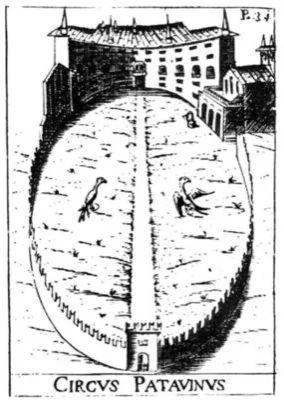
A careful walk through the 60th Venice Biennale confirms this. Scrovegni’s treasure chest was nearly demolished in the 19th century along with his palace at the north curve of an ancient arena. A private initiative and the purchase of the chapel by the city in 1880 prevented this. Admission is now strictly regulated. It must be booked well in advance. Groups of 25 people are allowed in for 15 minutes into the now freestanding, externally unremarkable high Gothic brick building. The contrast with the interior could hardly be greater. In dozens of individual pictures over four registers and a concluding barrel vault, Giotto unfolds a fireworks display of al fresco depiction art. The lives of Jesus and Mary, the Annunciation, and the Last Judgment are vividly presented to the viewer. The painter knows how to imitate every material, the marble cladding of the chapel, the garments of the protagonists, the deceptively real stone of the allegorical figures of the cardinal virtues and deadly sins. A sensation that surpassed any Gothic stained glass and Byzantine mosaic art, the leading media of the time, in inventiveness and expressive power. Two hundred years later, Michelangelo would make the first attempt to surpass this feat with the Sistine Chapel in Rome. We are still working on Giotto’s attempt to create a spiritual but at the same time consistent, believable parallel world into which we can immersively and performatively enter.
Over the 19th century, with its rigorous separation of genres, it has been suppressed and forgotten that the Scrovegni served as the solemn climax and stage for the annual Annunciation processions with performances of the legend of Mary. In these, leading members and friends of the family took on the roles of the protagonists, while the audience saw themselves in the role of empathetic comparing witnesses who followed the reenacted holy events directly and compared them with those imagined by Giotto on the walls. Visual arts and architecture harmonise as a perfect frame and stage for performative representation and participation.
Immersion, diving into spaces of imagination, and performance, staging, and audience participation are also the magic words of the major exhibitions in the lagoon city. This is still true for the main exhibition Foreigners Everywhere, curated by the artistic director of the Biennale, Adriano Pedrosa, in the Giardini and the Arsenale. Where the curator conservatively and museum-like focuses on classical media such as painting and sculpture, the immersion and dramaturgy of his parcours primarily aim to create connectivity for visitors, offering spaces where the artworks can formally and thematically enter into a dialogue with each other and with the viewers. In a nutshell, he offers them an extended Scrovegni Chapel.
Immersion into space
Let’s take the beginning in the Arsenale. Before the endless stretch of historical magazines begins, we enter a mysteriously lit room with parallel shadow stripes running over the massive supports and brick walls. They originate from a huge mesh of grey lashing straps suspended like an intermediate ceiling. We also read them as a final and significant comment on the ongoing popularity of lashing straps in contemporary art. This beautiful initiation comes from the New Zealand Mata Aho Collective, which comprises four Maori artists: Bridget Reweti, Erena Baker, Sarah Hudson, and Terri Te Tau. With the title of their work Takapau, 2022, the concrete artwork translates back into the real, everyday life. For „Takapau“ is the Maori word for a particularly finely woven mat used in ritual acts for birth, marriage, and death. Takapau can stand for life, its complex web of relationships, as well as for the complexity of art and what follows in the exhibition. Thus, the installation is a space of transformation and initiation. By entering it, we participate, linger, or pass through it, leaving with a renewed state of mind. In this way, the work is iconic for this 60th Venice Biennale. None in the main exhibition is more impressive or contemporary.
In addition, the other main exhibition of the Biennale comes across as solidly conventional, especially where it earnestly tries to impress. Its curator, Adriano Pedrosa, director of the Museu de Art de São Paulo, skilfully presents over three hundred artists, mostly from Latin America, many of whom are unfamiliar even to art professionals. While this is impressive and overwhelming, it leaves a somewhat hollow feeling. Pedrosa focuses primarily on painting, with his parcours in the Arsenale resembling a grand, proven Scrovegni Chapel, aiming to engage the audience with the exhibits. The 19th-century museum makes a cheerful return. Photography appears only marginally, as do videos. Conceptual, performative, and actionist art, which is so rich in the global South, especially South America, remains relatively underrepresented. Where performance is part of the artistic practice, it remains external to the exhibited works, such as the dance session documentaries of the Hong Kong-Chinese artist Isaac Chong Wai, who lives in Berlin, or the Amsterdam collective Antonio Jose Guzman & Iva Jonkovic, who present a tower of beautifully indigo-dyed cloths created collaboratively in workshops in India. However, a workshop does not imply a performance character. Artists who, for example, combined art, theatre, and activism with political resistance in Brazil from the 1960s onwards, such as Lygia Clark, Hélio Oiticica, or Augusto Boal, are not mentioned at all. Pedrosa’s programme of ennoblement falls back into long-overcome patterns. He aims to explore the unfamiliar within the familiar, the other modernity, away from the hegemonic centres of the USA and Europe. Yet he fights fire with fire. No previous main exhibition of the Biennale has been so conservatively museum-like. This is an unintended opportunity for the neo-fascist sympathising TV journalist and theatre man Pietrangelo Buttafuoco, who was appointed indefinitely as the new president of the Venice Biennale by Giorgia Meloni. This signals a storm warning for the lagoon.
The effort to score in the attention economy of Biennale visitors is great. The attraction of the Venice Biennale lies paradoxically in the often-dismissed national pavilions, which have used the Venice stage for decades to counteract the concept of nation and national identity or to give space to unheard voices in their own or other countries. Most rely on spaces of participation, immersion, and performative formats. The spectrum was wide. The extremes ranged from the innocuous Swiss Pavilion to the profound German one, the cheerfully colourful American Pavilion, and the impressively thought-provoking Polish Pavilion. Here, art borrows moments from theatre. With stages for the artists, they simultaneously offer stages for their audience.
Stages of Participation
The stack of amalgamated red-lacquered pedestals in the Cours d’honneur of the lively American Pavilion was hard to miss. The pedestals could, and indeed should, be climbed. Many visitors understood the invitation and from day one eagerly staged themselves for selfies. People became part of the artwork. The images distributed through social networks advertised the USA and its representative at the art biennale. His name is Jeffrey Gibson, a gay member of the Choctaw and Cherokee tribes, making him the first Native American to represent the USA in Venice. He aims to bring the marginalised, the excluded, as well as the visitor, to the centre of attention. This leads to an all-over display of geometric patterns and figures in bright colours, which Gibson understands as a protest against a drab mainstream modernity.
The moment of active participation, of cooperation, was most impressively and aesthetically convincingly implemented in the Polish Pavilion. Pure participation. What looked like mere participatory art captivated precisely because it suppressed the audience’s impulse to join in. After the inauguration of the new Polish government, the new cultural administration acted swiftly. A nationalist grand painter was uninvited and instead, the Open Group collective, consisting of Yuriy Biley, Pavlo Kovach, and Anton Varga, was commissioned. They now offer a monumental war karaoke. The trio projects the videos Repeat after Me, 2022 and 2024, in large format onto the cross walls of the pavilion black box. Biley, Kovach, and Varga filmed civilians of all ages in a refugee camp near Lviv, always in the same setting, close-up, frontal, and outdoors, without shelter. After a brief introduction of themselves, they recount their trauma, the sounds of a grenade, an approaching bomb, a machine gun. The „TDDDDZDZHZZZHHH-PIU“ was now coloured for us in the English subtitles as in karaoke. However, neither my friends Ida, Inke, Claudia, nor I felt inclined to follow the invitation, although microphones were set up in front of the screens. We were too breathless at the presence of the narrators. Art is more than a beautiful appearance and a vehicle for this or that message. It can give voice to others and otherness. It can create empathy, immediacy, and relevance through the density or refusal of participation.
The Australian Pavilion also relies on participation and refusal. It was designed by a member of the First Nations, Archie Moore, and rightly received the Golden Lion for the best national pavilion. Here too, an impressive memorial space is created. The artist placed stacks of blackened files documenting the racist exclusion policies of the Australian government on an extensive pedestal in the middle of a distancing basin. As a counterpoint, Moore wrote a biblical family tree on the black walls with chalk, weaving the life lines of his Kamilaroi and Bigambul ancestors with those of contemporary humanity. Moore focuses strongly on distance from the object, reflection, and enlightenment rather than on overwhelming. Participation for Moore, as for the Polish Pavilion, means breaking immediate involvement to call for participation as a process of thinking and intellectual effort. This is not easy, as the competition from commercial digital virtual reality has become so great that the art field has had to outdo itself with interactive, „immersive“ experiential worlds since the early 2000s. One strategy to undermine this pressure lies in the affirmative subversion of established narratives and their representation by the entertainment industry, political propaganda, and scientific visualisations in diagrams, pictures, texts. An impressive example is offered by the Czech Pavilion, where the artist Eva Kotáková tells the story of the giraffe Lenka in Prague Zoo as part of the diplomatic symbolic politics of socialist brother countries behind the Iron Curtain. The fragmented giraffe body can be walked through and marvelled at and serves as a stage for the artist’s supplementary texts, drawings, and performances, which casually and humorously expand and enhance the grotesque story of the animal to the personal and, above all, to the universally relevant and contemporary.
Stages of Immersion
The seriousness of engagement and the playful ease of the Polish Pavilion remained unmatched. In comparison, some presentations fell significantly short. Right at the entrance of the Giardini stands the elegantly modernist pavilion by Bruno Giacometti from the 1950s. Diversion is provided by the bi-national Swiss-Brazilian artist from Geneva, Guerreiro do Divino Amor. An animated trans-goddess leads from her temple through a birth canal into a cosy boudoir via LED rotors. Those who wish can recline on comfortable cushions to dream under a dome projected with mainstream LGBTQ+ triggers and cliché images of German-speaking Switzerland. Immersion here meant submerging, participation, taking part in the artist’s merely claimed club community.
Participation in marginalised communities and memories is also the focus of the French Pavilion by the artist Julien Creuzet, who hails from Martinique, and the British Pavilion by the artist and filmmaker John Akomfrah. While Akomfrah places powerful videos of disturbingly beautiful landscapes, people, streams, and the sea in a narrow parcours to create contemplation and empathy, Creuzet offers his audience more space to move and explore between video walls and airy sculptural meshes, accompanied by a penetrating sound. France had, along with Belgium, by far the best sound system.
Nothing constitutes community as immediately as music, dance, and song, the magic ingredients in the Belgian and Egyptian pavilions. The collective the collective organised long processions from Charleroi, Dunkirk, and Spanish cities to Venice, under the title The Petticoat Government, where larger-than-life traditional folklore figures were carried. The pavilion was declared a passage, with celebrations and dances under the framework of the exhibited giants.
The immersive and community-building power of music and song was also utilised by the Egyptian artist and filmmaker Wael Shawky in the Egyptian Pavilion. While visitors usually gave Egypt a wide berth, this pavilion had by far the longest queues during the opening days. The reason: the length of the video, which, like a theatre play, should be watched from the beginning, only allowing 40 viewers at a time, and especially the quality of the offering. While Shawky’s sculptures in the darkened room barely sparked interest, the film projected across the entire length of the wall captivated. Known for his parables and stories presented with puppets and marionettes, Shawky dared to tackle the grand genre of opera in Drama 1882, 2024. He now tells the story of the so-called Urabi Revolution of 1879-1882 in candy colours and historical costumes in a singspiel in the style of epic theatre. History is cleverly presented and subversively twisted. The proximity of the audience to the large projection surface and the characters creates an immediacy that is hardly conceivable in analog, real-presentational performances, unless the audience itself becomes the actor.
This occurs in the pavilions of Serbia and Germany. What began in the 1970s with Ed Kienholz and Illya Kabakov expanded over the years, evolving into walk-in spatial sequences that told stories, as seen with Gregor Schneider, Mike Nelson, Christoph Schlingensief, or Christoph Büchel, who now presents his most extensive spatial installation in the Palazzo of the Prada Foundation in Venice. These stages more or less consciously follow Giotto’s tradition of narration, making sacred events in the image present and performative as testimony.
The Serbian Pavilion attempts this with its stage production „Exposition Coloniale.“ Its artist, scenographer Aleksandar Denić, works with similar methods to Büchel, using an abandoned stage, props, and an atmosphere of neglect and hopelessness, casting the visitor as a part of the production, reflecting their own desolation. In Denić’s work, the audience moves like actors in a film set, portraying the reality of a border post at the EU’s edge with dilapidated booths, broken phone boxes, and a functioning jukebox with European songs. This is professionally done theatre with a good dose of humour and a sense for the marginal. However, despite the effort to present the shabby, it ends up being too routine and, in the end, too smooth.
The German Pavilion is aware of this danger, with one of its participants being Ersan Mondtag, a professional theatre man, director, costume, and set designer. Alongside the video and object installations by the Berlin-based Israeli Yael Bartana, Mondtag installs a monumental memorial architecture before and behind the main entrance of the building from the Nazi era, under the guidance of the curator and theatre woman Çağla, who is also of Turkish descent, forcing the audience, as with Anne Imhof’s Faust in 2017, to enter through the back door. The actual threshold, as the title „Threshold“ of the German Biennale contribution suggests, is thus symbolically blocked. Inside is a multi-story mud-plastered monument that seems to slide outward. It serves as a heavy stage of remembrance, both a catafalque remembering his grandfather, a first-generation Turkish migrant worker, and a cenotaph for all those lured to Germany as „guest workers“ with empty promises. Here, we are not merely spectators but witnesses of martyrdom. For Mondtag, participation means – like Magdalena in the Christian Passion – empathy. His grandfather worked at Eternit in Berlin, as evidenced by original documents on the ground floor. He died of asbestos poisoning. Therefore, the accessible floors, where he reconstructs a humble apartment, are covered in dust, which we carry on our hands and clothes outside, just like the performers who silently re-enacted the Mondtag family’s grief and mourning for the grandfather during the opening days. This theatrical element wasn’t necessary to grasp the message from the set. Even if ironically broken, Yael Bartana’s fantasy of the Jewish people’s extraterrestrial survival in a giant spaceship, presented through a stage model and video wall, fits well aesthetically and in terms of pathos.
Büchel – Illusion Machine of Superlatives
The immersive efforts of the national pavilions are only surpassed at Ca‘ Corner della Regina. Without the Biennale’s „Collateral Event“ label, Swiss artist Christoph Büchel, as a guest of the Fondazione Prada, stages an unparalleled material spectacle, „Monte di Pietà.“ This is surprising, as Büchel had announced his withdrawal from the art world after the Barca Nostra debacle in 2019. In St. Gallen, in 2002, he set up „House of Fiction (Pumpwerk Heimat),“ one of his first and still accessible installations today. The audience is intellectually and physically challenged by navigating a labyrinthine, chaotic sequence of spaces, constructing their own narratives. Not linear but chaotic. „Monte di Pietà“ can be read as a calibrated expansion of this concept. The baroque Prada Palace, long a pawnshop, prompted Büchel to reflect on value, goods, and money flows. He transformed the entire palace into virtual sales and office spaces for second-hand items, crammed with clothes, real bombs, genuine artworks from Titian to Beuys, muzzle-loaders, flower vases, genuine jewellery, knick-knacks, bicycles, and mink coats, while the mezzanine floor offered glimpses into the recently vacated surveillance, celebration, and party rooms of those who ran the place. Extravagant, opulent critique of capitalism. It takes capital and chutzpah to pull this off.
Enrico Scrovegni’s father is mentioned in Dante’s Divine Comedy. He roasts in hell because he amassed his fortune through usury, driving his debtors into poverty. Giotto’s chapel was intended to restore the family’s good name. The indulgence is valid until Judgment Day. With Scrovegni, we learn that art cleanses a guilty conscience and carries the name of its owner forward. As Büchel’s fame grows, so does that of the Prada siblings.
The text was published first in a revised editorial form in KUNSTFORUM International Bd. 296 in German – see on this website

 Max Glauner